Verizon and the big tease: FIOS
I remember how excited I was when I first read about Verizon’s FIOS technology. The company intended to blanket the country with fiber-optic lines, bringing lightning-fast Internet, wonderful high-definition TV and low-cost, reliable phone service to millions of homes. I was especially thrilled that I’d finally have another Internet service option besides Comcast and the phone company’s DSL service. I could hardly wait.
That was nearly five years ago, and I’m still waiting for FIOS (the F surely stands for fiber, but no one’s very forthcoming about what the rest of it stands for). It was introduced in Keller, Tex., in September 2005. Reading about it, I felt like the people in Keller were taunting me. “It’s been the most incredible service I’ve ever had,” one Keller citizen was quoted as saying. “You’re either part of the technology revolution or you’re not, and I wanted to be part of the cutting edge.” Uh – me, too.
By June 2007, Verizon’s FIOS was available in 12 states and had more than 500,000 subscribers. Although my state, Maryland, was one of them, my neighborhood was not.
I started checking Verizon’s FIOS locator page regularly. Every time I entered my address and phone number, it responded with the message: “We’re sorry. FIOS is not currently available in your area.” As if I didn’t know that. It also gave me the option to add my name to a list so that I’d be notified when the service was available. But they never wrote, they never called. If they had, I would’ve been deluged with voice and e-mails – that’s how often I added my name to that list.
Meanwhile, FIOS was growing up all around me. In Northern Virginia. In the District of Columbia. In several parts of Maryland. But not in my neighborhood.
Then, last summer, glimmers of hope. FIOS trucks were spotted in our neighborhood. Then, our homeowners’ association newsletter announced that, indeed, FIOS would be coming in the summer of 2009. But it turned out that Verizon was leading me on yet again. FIOS was installed in the next neighborhood over – about six blocks away. It did not come to my street.
As of the end of the second quarter of 2010, Verizon FIOS was available to 12.9 million “premises,” according to its financial reports. And I was pretty sure that mine would never be one of them.
Finally, this summer, along came a crew of subcontractors – digging holes and trenches every 10 to 20 feet, laying fiber, putting stinking port-a-potties at the end of our street. And Verizon started teasing me again with flyers left on my front door and brochures in the mail. “FIOS is coming soon to your neighborhood!” they said.
It’s been about six weeks now. The construction crews (and the port-a-potties, thank God) are gone. All is quiet. Including Verizon. I haven’t received a flyer in awhile. Tonight, I checked the FIOS availability page again. It still tells me that the service is not available in my area.
As far as I’m concerned, FIOS stands for “forever imminent online service.” Before I’ve even had a chance to try it – and regardless of how wonderful the technology may be – I’ve soured on FIOS. If Verizon does ever offer to sell it to me, it’s hard to imagine that it could be so incredible as to make up for these repeated disappointments. Besides, I bet that the next new, and even better, technology is right around the corner. I’m so good at waiting, I just might wait for that one to arrive.
Love those interruptions
As every freelancer knows, working from home has its pros and its cons. Among the pros: spending all that extra time with family. Among the cons: having family assume that since you’re there, you’re always available to them. We’ve all had to manage this delicate balance.
I’ve adjusted to different types of interruptions as my son has grown. When he was a baby, his schedule ruled. Until he went to daycare, I crammed my work into the short slots of time between naps, feedings and play dates. As he grew, the types of interruptions changed. As a boy, he sometimes seemed to demand my uninterrupted attention just when I was in the thick of a conference call. But he gradually learned to refrain from interrupting me when I was on the phone, “unless there’s blood or fire involved.” (We later added water to that directive, after he shyly and sheepishly called down the steps to me one day that water was coming through the ceiling. The upstairs toilet had overflowed and he was trying to stem the tide by himself.)
Even now, at age 18, he sometimes bounds into the house – if he’s with with his cadre of friends, it sounds like a herd of elephants – and starts asking for money or the car before he even reaches my office, only to find me with the phone to my ear, glaring at him.
As kid interruptions subsided, pet interruptions escalated. There was always the dog, whimpering at the front door for a walk. As he reached middle age, my Yorkie developed seizures. Many times I conducted an interview while stroking and comforting his quivering five-pound body splayed out on the floor. He also had stomach problems. I became expert at discerning the distinctive retch in time to scoop him up off the carpet and onto the hardwood floor (for easier post-interview clean-up).
That dog now is also 18. He’s blind, deaf and arthritic, and sleeps most of the time. Still, when he wakes up and figures out I’m not in the same room, he goes hunting for me. He’ll sit at the top of the stairs whining until I come to carry him down to my first-floor office. And I’ve learned that I can’t ignore that whine for long – he’s tumbled down those stairs more than once.
Like an old man with Alzheimer’s, he sometimes wanders aimlessly around my office. He usually ends up ensnared in the nest of wires and cables behind my desk. I know he’s back there when my speakers start inching away from me.
Soon, both son and dog will leave – one for college and the other for the great beyond. It will be quiet around here. My work days will run more smoothly. Gone will be all those interruptions. And I’ll cry, missing them terribly.
The art of journalism
I didn’t learn much about art in journalism school. The professors who taught reporting, writing and editing focused on gathering information, checking facts and writing a story that answered the five Ws: who, what, when, where and why. The art – if there was any at all – was someone else’s job.
When I was reporting for newspapers, editors started asking me to gather art as well as information. Ask your sources for mug shots, they’d say. It was the 1980s, and USA Today had defied the critics who called it a cartoon newspaper, making the then-unfamiliar concept of infographics popular. Suddenly editors were demanding that I get statistics the art department could use to make fancy, colorful charts. I, and my reporter colleagues, considered it a burden.
I didn’t learn the value of art until I became a magazine editor. And it didn’t come easily. I butted heads with more than one art director who demanded we sacrifice text in order to make room for a photo spread, illustration or graphic. In the art director’s mind, a picture literally was worth a thousand words. The worst was when he wanted neither words nor pictures – he wanted aesthetically pleasing white space. To me, white space was nothing more than a hole that needed to be filled, preferably with words.
Gradually and grudgingly, I began to appreciate the role art can play in journalism. I became the dreaded editor who demanded that reporters gather good art material along with the facts and quotes for their stories. Some great art directors taught me how important the presentation of a story can be. They showed me how art can heighten the impact of a hard-hitting piece of investigative reporting. How a good custom photo of a CEO can reveal character and pique interest, thus pulling the reader into the article. How a well-designed graphic can convey more information than paragraphs full of tedious statistics. How unusual typography can convey the mood of a story. I even started to like white space.
By the time I left that magazine, I was a complete convert. I had grown to love art and respect the creativity of art directors. One of the favorite parts of my job was the art meeting for each issue, where we brainstormed what kind of art to develop for each feature and what we should do on the cover.
That type of collaboration – the union of great writing with great artwork – seems rare today. For one thing, there aren’t many magazines left that can afford to invest in expensive photos or illustrations. Second, as print has waned and the Web waxed, tasteful art designed to support the story seems to have fallen into the background. Indeed, on the Web the layout of stories is still awkward, much less artistic. I rarely see anything comparable to a two-page magazine spread that pops out at readers and demands their attention. (Although Gannett’s experimental online magazine, The Bold Italic, is an interesting attempt.) And magazine covers? Sort of an anachronism, although publishers still reproduce on the Web what they’ve done in print.
But as more online magazines experiment with multimedia, that’s starting to change. Designers are using new types of art, including video and audio, to illustrate stories. (Hmmm, I can think of lots of different sounds and music that could accompany a story on, say, the BP oil spill, but what about an article on the latest wireless technology?)
Editors are asking for podcasts and even videocasts of interviews. With all this new technology, journalism is going to become much more than just reporting and writing. We journalists are going to have to loosen our exclusive reliance on the written word and learn how to use other media creatively. For those who do, journalism will become more art than craft. And for some of us, it just might become more fun than work.
A beginner’s guide to multimedia reporting
At the Future of Freelancing conference in June at Stanford University, Richard Koci Hernandez, a Ford Foundation Multimedia Fellow at the UC Berkeley Graduate School of Journalism, gave an excellent presentation on multimedia reporting.
It essentially boiled down to “teach yourself.” That’s nothing new for freelancers. But doing all the research to find out what we need to get started and where to find it – that can be a real time-suck, assuming you can even find this information. And that’s what was so valuable about Hernandez’ presentation. In one hour, he ticked off his recommendations of audio and video equipment as well as software programs we’d need to get started. All of it is geared for beginners and carries a price freelancers can afford – most of the equipment is under $200 and much of the software is free. He recommended websites where we could learn the basics. He pointed us to sources of audio, video and still images to illustrate our stories.
Many of us were amazed at how magnanimously he shared his knowledge. With Hernandez’ permission, I’ll continue in that spirit and “pay it forward” by passing on some of the golden nuggets.
Pocket video cam: Kodak Zi8
Low-cost tripod for video cam: Gorillapod
Digital audio recorder: Edirol R-09HR
Microphone: Sennheiser MD-42
Produce a slideshow with sound: Soundslides
Edit your sound files: Audacity
Edit your video: YouTube’s recently-launched online video editor
Illustrate your stories with maps: Umapper
Create timelines for your stories: Dipity or VuVox
Find public domain clips of audio, music, video or still images: Internet Archive, Audiojungle, Creative Commons
Create graphs, charts, word clouds and other types of visualizations: Many Eyes
Best site for online tutorials: Lynda.com
Get tips on online storytelling from Ira Glass on YouTube
Useful websites on digital journalism: 10,000 Words, Interactive Narratives and The Poynter Institute’s News University
Journalism 2.0
Journalism is all about telling a great story. That hasn’t changed, and never will.
That was the happy message at the “Future of Freelancing” conference held last week at Stanford University. Several sessions served to inspire the 120-plus mid-career freelancers in attendance, telling us to stay brave and persistent in pursuing our craft. I was heartened by a panel of assigning editors from Popular Science, The Washington Post, Wired and The New Yorker, as they talked about the wonders of long-form journalism, a “crying need for narrative” and their hunger for new ideas from freelancers.
Everything else, however, is changing fast: the platform on which we publish our stories, the tools we use to tell our stories, and who controls how we tell those stories and to whom. While the changes are daunting at best, for freelancers they can be an opportunity to become the vanguard of a new age of journalism.
It’s news to nobody that publishing platforms are changing. While paper isn’t going away, other platforms have proliferated. The Web is already as popular as paper, for reading short items at least. The e-reader and iPad are becoming increasingly popular as ways to deliver news and magazine stories. Writers need to be on all these platforms, or they’ll miss part of their potential audience.
As these platforms change, they open up new ways to tell our stories. Ways that we should all learn. Although the editors at most sessions wouldn’t go so far as to say they’d pick a freelancer with video and audio skills over one with just writing skills – all other things being equal – it was clear to me that writers without audio and video in their toolbox will limit their opportunities. The most practical and useful session of the conference was given by Richard Koci Hernandez, a Ford Foundation Multimedia Fellow at the UC Berkeley Graduate School of Journalism, who inspired us with his belief that today “is the golden age of storytelling,” excited us with the prospect of “reaching a global audience with one click” and gave us practical advice on how to acquire audio and video skills.
Finally, the old gatekeepers of publishing are losing their grip on the creative product. Remember the term “disintermediation,” which was popular in the 1990s when the Web had just burst onto the scene? It’s gaining speed in publishing. Authors are publishing books themselves rather than going through traditional channels. Why can’t journalists publish their stories directly on the Kindle? Journalist Damon Brown recently published a guide to the iPad on the Kindle, for example. It’s priced at $1.99.
For those journalists with an entrepreneurial bent, in particular, the future could be interesting indeed. This conference was a one-time deal, the project of Christine Larson, a John S. Knight Journalism Fellow at Stanford. She deserves an award for having the idea and pulling it off. We freelancers – indeed all journalists – need more conferences like this. I hope the immense amount of positive feedback I heard at the conference turns into action by all attendees to make sure we get them.
Does the future of freelancing include journalists?
I’m looking forward to attending “The Future of Freelancing,” a conference this week at Stanford University. Co-sponsored by the John S. Knight Fellowships for Professional Journalists and the American Society of Journalists and Authors, the conference’s goal is to “help freelancers explore their evolving careers and stay inspired.” Well, I know many freelancers that are not only uninspired these days, they are downright desperate. In fact, the conference title might be more fitting if it had a question mark at the end. Because many of my colleagues doubt journalism, much less freelance journalism, has a future.
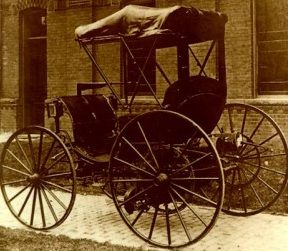
I’m convinced it does. But it’s going to be so different from what we’re used to that we aren’t even capable of conceiving it yet. A source for one of my stories on digital publishing points out that when the automobile first came out, people called it the horseless carriage. The only way they could define these early cars was by relating them to a familiar mode of transportation. That’s the kind of disconnect we have in the publishing business. The whole world has changed, and we don’t understand the new world well enough yet to see where and how we’ll fit in. And many of us are terrified that we are selling buggy whips.
The terror has been building steadily this year. A couple of months ago, I participated in a lively LinkedIn discussion. The thread was started by a post by freelance colleague Polly Traylor, who lamented the state of the freelance business on her blog. It didn’t take long for many of us to chime in – and the opinions ranged from: it’s a brand new world and “those who learn to adapt and embrace the change may actually find a lot of opportunity in it” to “freelance journalism is dead” and all that’s left to do is “put fresh flowers on its grave.” (You can read the discussion here.)
It’s clear that no one – including the biggest media companies – has a clue. Consider these two news reports from just this week. First, News Corp. announced strategic moves toward its promised strategy of charging readers for online content. It bought Skiff LLC , which makes an e-reader and a digital publishing platform. News Corp. also invested in Journalism Online, a startup by Steven Brill and other media executives that aims to offer a way for publishers to charge readers for online news.
In contrast, Forbes.com is going in the other direction, apparently planning to use thousands of unpaid contributors instead of professional journalists, according to a report by Paul Carr on TechCrunch. At a recent staff meeting Lewis Dvorkin, who oversees Forbes editorial, said that “Forbes editors will increasingly become curators of talent,” according to Carr. As my colleague Howard Baldwin has pointed out, that comment makes us freelancers feel like we belong in a museum. (Getting old is a theme for Howard. See his blog, “Middle-Age Cranky.”)
Meanwhile, social media consultant Paul Gillin recently passed along this trailer to an upcoming documentary, “Fit to Print,” on the dying news business. While melodramatic, what this clip does not exaggerate is the level of fear among professional journalists.
It’s the end of the journalism world as we know it. The big question is: what’s next? I hope this conference gives me at least some possible answers. Tune in next week to find out.
Clips become clicks, and then are gone
Many of my stories are both printed in a magazine and posted on the Web. I’ve always asked editors to send me issues of the magazines, so I have hard-copy clips of my work to show potential clients. But as print disappears, more and more of my stories live solely on the Web. Rather than final, tangible pieces that can be permanently collected in order to show my best writing, my stories have become ethereal sets of ones and zeros that can disappear in an instant. Recently, that’s exactly what a bunch of them did.
A client of mine was bought by another publishing company early this year. My editor warned me a few weeks ago that the publication would be transitioning to a new Web platform and that my stories would be temporarily inaccessible. I thought it would take maybe a couple of days. It’s been at least two weeks now, and my stories – hundreds of them – are nowhere to be found. They aren’t on the client’s site; they aren’t on the Web. I wouldn’t be worried, except that this particular client has no “print edition.” My stories existed only on the Web. Now, when potential clients click these links on my website, they are sent to a page that says the story was not found.
My stories are gone. And I’m not sure when they’ll be back.
Meanwhile, another client gated its website and started charging a subscription for its online version. I’m not sure how long ago it did this – it didn’t tell me – so I don’t know how many of my potential customers clicked on a link, only to get a pitch to sign up for a subscription rather than my story.
A third client nearly disappeared entirely, taking my stories along with it. It was going out of business, but ended up being saved at the eleventh hour.
Of course, I’ve removed these bad links from my website. I’m hoping to have at least some of them back up soon. But the experience has taught me to grab a copy of my stories as soon as they are published on the Web, because their existence is tenuous. And yet, a copy pulled off the Web doesn’t seem as professional, or even legitimate, as a printed clip or a PDF of a magazine layout. The purpose of traditional clips was two-fold. They not only showed samples of the writer’s work, but also proved that the writer had been published by a reputable news or literary organization. A collection of clips was permanent; a collection of clicks is ephemeral. As the paper age of publishing disappears, writers need to figure out how to preserve their published work.
Everyone nedes an editor
As a professional journalist, I write about specific topics. Sometimes it’s a topic I’ve chosen and pitched to a publication. Sometimes it’s assigned by an editor. But either way, I have to follow that particular publication’s model, in terms of the angle on the topic as well as the tone and style of the writing. I also have to follow the directions of that particular editor, from which aspects of the story to emphasize to little copy-editing nits like whether to use the serial comma.

But with a blog, there is no editor. One of the joys of blogging is that I can write about anything I want, in any way I want to. No one tells me how to dot my I’s, cross my T’s or place my commas. That’s a great freedom. Freedom to show what a great writer I am. And freedom to display to the world my stupid mistakes.
We writers tend to be egotistical. That means we almost always think we have something worthwhile to say and know the best way to say it. We’re also rather solitary, introspective creatures, so we live in our heads to a large extent. We can easily convince ourselves that our way of looking at something is the only way or the best way, that everyone knows what we know, or for that matter that our readers care about what we care about. When I write about that little white house down the road, for example, it’s easy to forget that most of my readers don’t know I live in the D.C. area and am thus alluding to the residence of the president of the United States.
Of course, blogging is supposed to be a two-way channel, so readers can politely point out my errors, or loudly disagree with my point of view, or heckle me and throw rotten fruit. But at least initially I’d like to walk onto the stage without my slip showing.
I was feeling a little naked out here until a colleague of mine suggested we edit each other’s blogs. It’s a great arrangement. I can still write whatever I want, in any way I want. But my editor points out what works and what doesn’t, at least from his point of view. He helps make my blog better, because he gives me a second perspective that doesn’t come from inside my head (and sometimes even catches my spelling errors). The best part is I can still do things my way, if I insist (no serial commas), but the edit process stops me long enough to check myself in the mirror to make sure I’m not going to make a complete fool of myself.
The shell game of healthcare costs
I wonder how much difference the new healthcare legislation is going to make in a system in which doctors are indifferent to costs and in fact often favor expensive and elaborate treatments over individualized patient care and common sense.
When I see a doctor, I pay attention to prices. My high-deductible insurance plan means I pay for the first $2,600 of my health costs every year. Often, the healthcare system doesn’t like it when I insist on knowing what things cost. This story is an extreme but telling example.
I went to a specialist for treatment of my herniated discs. The specialist was highly rated by a local magazine, so I expected top-notch care. What I found was a practice that seems designed to minimize contact with the patient while maximizing the amount of insurance money it can extract.
When I made the appointment and asked how much it would cost, the response was: “insurance will cover it.” When I explained that I would be paying for it and asked again for the cost, they claimed they couldn’t give me a price because it would be based on the doctor’s diagnosis after our consultation.
My first appointment was hardly a consultation. In fact, the doctor and his staff barely talked to me. I had been asked to fill out a 10-page questionnaire in preparation for our meeting. When I arrived, I reminded them of my concern over cost, and the receptionist assured me that I’d be presented with the price after the doctor had determined my treatment. I waited 45 minutes to see the doctor, who finally breezed in and spent all of 10 minutes with me. He then explained the procedure he recommended, and something about the way he said it made me think it was the exact same recommendation he would give to the 35 other patients he would see that day. Then he handed me a printout of the other things I should buy to treat the problem: a prescription pain patch, a back brace and a home transcutaneous electrical nerve stimulation (TENS) machine to relax back muscles and reduce pain. I wonder how much of a kickback he is getting from the manufacturers.
Again I asked what all this would cost. Again the standard response: “insurance will cover it.” He brushed me off when I tried to explain why that wasn’t an adequate answer.
No one ever gave me a list of the costs. I went ahead and had the procedure, because I was in pain and desperate (I later found out it cost more than $2,000), but didn’t follow the rest of his recommendations right away. I checked with my pharmacist and the pain patches cost $200. Each. When I went back for what turned out to be a five-minute followup, the nurse practitioner chided me for not following the doctor’s orders. And when I tried to explain to her my concern about cost? You guessed it: “insurance will cover it.” When it was clear I wasn’t buying, she yanked the info sheet on the TENS machine out of my hands and told me I could wait on that, but insisted I get the back brace. It came in the mail the other day. It looks expensive, but I won’t know how much it is costing me until the doctor bills my insurance company, and the insurance company in turn bills me.
My primary care doctor doesn’t even take insurance. I find that liberates both of us to cut through the insurance bullshit. He’s straightforward about costs. His rate is $90 per half hour. Period. He’s not trying to push more tests, procedures or pills on me. In fact, when I needed an MRI for my back, he gave me two different labs to call. He advised me to call both, explain that I was a “self pay,” and then dicker with them on the price. The first lab wouldn’t come down on the $1,100 sticker price. The second one dropped the price to $500.
Why is there such a lack of transparency, not to mention logic, in healthcare prices? Somebody in this system is making a lot of money from the fact that “insurance will cover it,” and those people have an obvious interest in obscuring costs. Until more patients have to pay more directly for their healthcare, which will in turn force all the players to be more accountable, I doubt that the system will change.
The guiding light of a story: its destination
Story structure is one of the most difficult aspects of journalistic writing. It’s also the most important. After all, structure is what makes a story, a story. Sometimes when a story’s hard to edit and I can’t figure out why, it eventually dawns on me that it has a bad structure, or no structure at all. The writer may have good information, great sources, proper spelling and grammar, and solid writing, but without a good structure the reader (and the editor) finds the story unsatisfying. It’s like the writer is handing you a box full of puzzle pieces, rather than fitting them together to show you the picture.

I’ve found that the most time-consuming and painful way to write a story is to dive in without a structure in mind. I may ultimately decide it’s not the right structure, but I have to start with some kind of structure. If I just start lifting from my notes, trying to string facts and quotes together in a serial process, there is no engine to drive the story and no digestion of the material to deliver analysis or fresh insight to the reader. As James W. Michaels, former editor of Forbes magazine, once said in critiquing a writer’s story: “This is not reporting, it’s stenography!”
Sometimes the structure is obvious. A story that documents someone’s life or a particular incident, for example, usually uses time as its structure. It starts at the beginning and ends at the end. Even then, however, it can be more interesting to tell the story out of sequence. Maybe starting at the end and interspersing flashbacks would be more compelling, for instance.
But many stories don’t have a beginning or end. I may write about a federal policy or regulatory issue and its impact on the technology industry. Or perhaps I’m covering a hot technology and trying to assess how it will develop, what products are likely and what companies might dominate the emerging market. In a policy story, I can present the arguments for and against. But that’s predictable, boring and delivers little value to the reader. For a technology or market, I can explain the factors behind it, say where it is now and report predictions from various industry luminaries. Ditto.
What helps me find a structure – especially with particularly complex stories with lots of sources – is deciding which story I want to tell. After all, from any given set of facts and interviews, many different stories could be told. So after I’ve finished all my reporting, I let it percolate in the back of my mind while I go do something else. When I’m ready to write, but before I review my notes, I start playing with a story map. I randomly jot down the ideas and facts that I remember most clearly from my research and reporting. Sometimes certain quotes still ring in my ears. Then I try to group the facts and quotes that relate to particular ideas. These are my main building blocks. But they still aren’t connected. However, after distilling the information a picture often starts to emerge. I reach a conclusion – based on who my reader is, the type of publication I’m writing for and my own judgment – about what is the most valuable story to tell.
Once I know what I’m trying to give to the reader, I can figure out the best way to do it. Hopefully the result is a puzzle solved – a deeper understanding of an issue or event – rather than just a jumble of facts and commentary.